History, Politics & Society
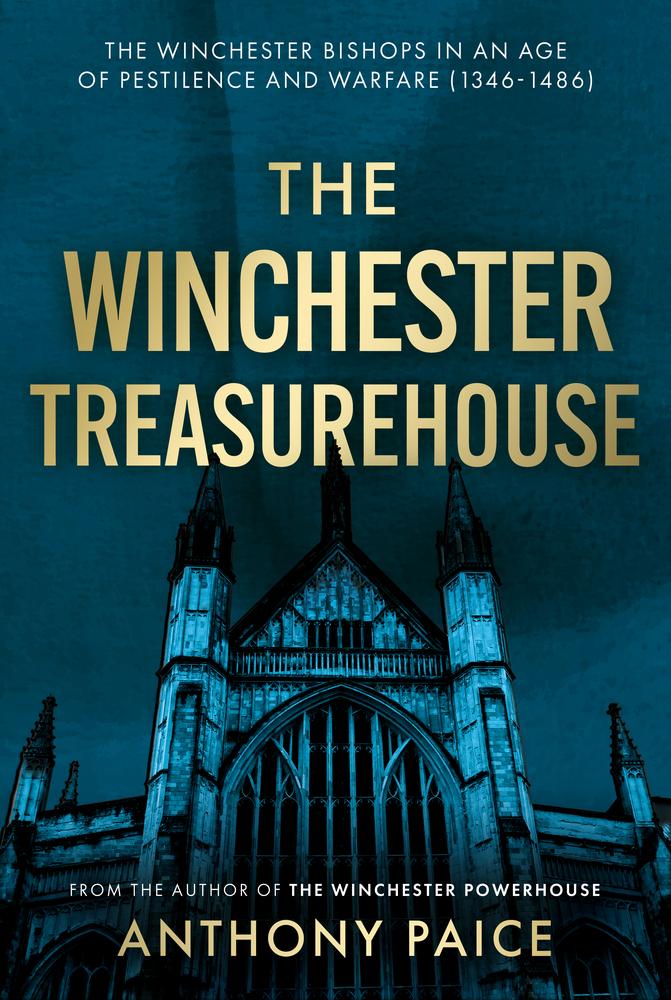
Nearly three centuries after the Norman Conquest and its consequent loss in status, the See of Winchester has managed to maintain its prestige. Now, in the tumultuous fourteenth and fifteenth centuries, the Winchester bishops continued to hold the highest secular office whilst attempting to improve the fabric of their diocese and restore the ranks of its clergy in the face of repeated pestilential visitations – notably the Black Death in 1348 – continuous warfare with France and bloody civil strife during the Wars of the Roses.
Uniquely, successive prelates were largely responsible for creating the English public school system through the foundation of both Winchester and Eton Colleges. These institutions were used to feed in a stream of undergraduates to Oxford and Cambridge colleges, also endowed and sponsored by the Winton prelates. The concern was to improve the quality of future clergy in an age of increasing uncertainty in religious thought.
Over one hundred and forty years, individual bishops reformed the currency system, managed the economy during the chaos caused by plague, re-edified their cathedral and were ever ready to offer large sums to the monarch to fund warfare, not least the Agincourt campaign.
This third instalment in the author’s Winchester series explores the Bishops of Winchester through the turbulent upheavals of the fourteenth and fifteenth centuries.
No reviews yet. Be the first to write a review