
Author
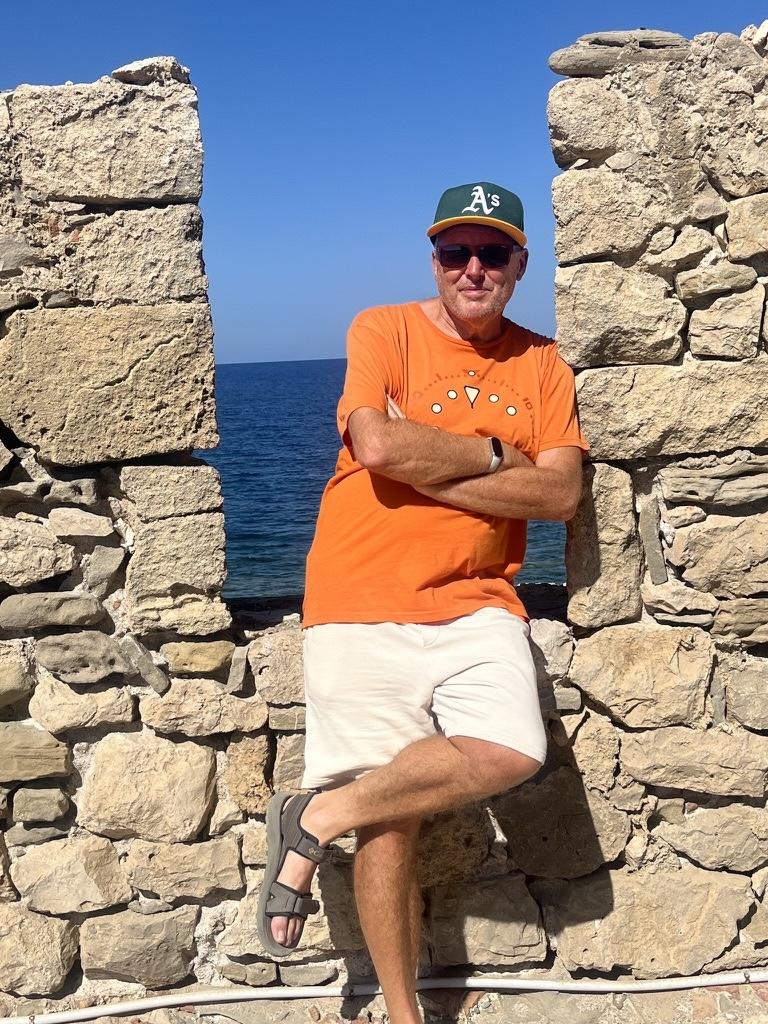
Andrew Buckley
As a Modern Languages graduate with a background in marketing and communications, writing has always been in my DNA - from a love of Richard Scarry picture books as a small child to an obsession with Agatha Christie in my youth, from a thesis on Thomas Mann at university to a more recent interest in the towering giants of metafiction - Alain Robbe-Grillet, Flann O'Brien and the criminally underrated John Barth.
Diagonal is my first published novel. It is not a biography. Nor is it a historical treatise. It is a work of fiction, pure and simple. However, any self-respecting novel should have at least one foot in the real world and the origins of Diagonal are to be found in the lives of Felicia Browne and her friend Edith Bone.
Felicia Browne was born in Surrey in 1904. She was a student at the St John’s Wood Art School and the Slade School of Art, before moving to Berlin in 1928 to study metalworking. Felicia joined the Communist Party of Great Britain in 1933, attracting the interest of both MI5 and Special Branch. In July 1936, she travelled to Barcelona with her friend, Edith Bone, to attend the People’s Olympiad. When fighting broke out and the games were cancelled, Felicia enlisted with the Catalan Communist Party and fought in Aragón on the Zaragoza front. She was killed in action in August 1936 whilst attempting to dynamite a nationalist munitions train, the only British woman to die in the Spanish Civil War.
Edith Bone was born Edit Olga Hajós in Hungary in 1889. After the First World War, she joined the Bolshevik Party and began editing the English version of the Communist International magazine. Edith travelled to Budapest in 1949 as a freelance correspondent for the Daily Worker. She was accused of spying for the British government and sentenced to seven years in solitary confinement. She returned to Britain upon her release in 1956 and gave a series of interviews denouncing communism. Edith Bone died in 1975.
The more I read about Felicia and Edith, the more I was convinced that theirs was a story that needed to be told. However, both Felicia and Edith were trailblazers for female emancipation and I felt it was important to respect their legacies. Consequently, I decided to reimagine the two women as fictional characters, named Alicia Green and Judith Kalmar respectively. This enabled me to imagine an alternative version of Felicia's untimely death. What if she hadn't been killed in action on the Zaragoza front? What if she'd actually been murdered by her own government?
I do hope you enjoy reading Diagonal.
Andrew M. Buckley
Newcastle upon Tyne
My News
I'm currently working on my second novel - Angel Station, set in Islington and with a timeline that shifts back and forth between 1982 and the present day. I look forward to providing more details of this project as the novel progresses.
Books by Andrew Buckley

Diagonal
£9.99
Author Gallery