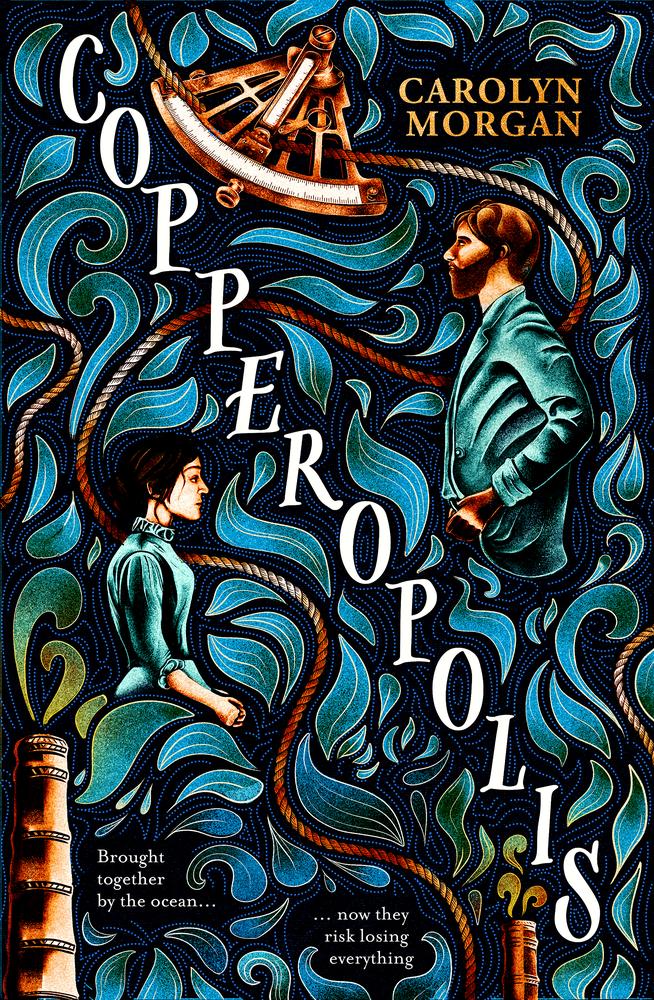
Historical
Copperopolis
by Carolyn Morgan
- ISBN:
- 9781835744840
- eISBN:
- 9781835746103
Paperback
£9.99
Synopsis
1860s Swansea, where copper can make your fortune – at a price.
John runs away to sea to escape rural poverty. The ocean fuels his wanderlust and he becomes a master mariner. Margaret, a fiery Gower farmer’s daughter, falls in love with his adventurous spirit. A pioneering woman of her era, she learns to navigate, and they sail together, sharing a passion for the ocean.
When John’s ship is wrecked, rumours that it was scuttled jeopardise his reputation. Short of options, John gambles on the copper trade with Chile, skippering a ship round Cape Horn – the ultimate test of seamanship but a graveyard for crews.
Meanwhile, Margaret uncovers the damage copper inflicts on Swansea’s community, causing destitution and deadly pollution, as smelter Vernon grows rich.
Horrified, she collaborates with shipowners conspiring to wrest control from Vernon. But when Vernon discovers the plot, the family’s reputation and livelihood is at stake…
Also available as
RRP £3.99




Read the reviews
Here's what readers have to say about this book....
Molly G
Copperopolis is a delight – an atmospheric novel set in Victorian Swansea, with a pacy story, memorable characters and plenty of intrigue. Against a backdrop of ships, coal and the booming copper trade, Carolyn brings the city and its maritime history vividly to life. I particularly enjoyed the way the history is woven naturally into the story, giving a fascinating glimpse into the people and industries that shaped Swansea during this period without ever slowing the pace. A thoroughly enjoyable read. Definitely a good pick for fans of Tracy Chevalier and Stacey Halls.
Judith Heneghan
Copperopolis is an atmospheric debut set in Swansea’s seafaring and industrial past. Late nineteenth-century coastal towns and the windswept Gower Peninsula are brought to life with great flair, while the author’s vivid, muscular descriptions of life at sea leave us in no doubt about its dangerous, arduous and exhilarating demands. The novel’s depiction of the environmental and human costs of the copper industry gives it a striking contemporary relevance, but it is the tension between John Clement’s expanding world and his wife Margaret’s longing to share it with him, even as she questions its toll, that gives the dual narrative its emotional force. The story of their love match plays out through the decades with refreshing realism as well as warmth.
Patricia Duncker
This wonderfully absorbing portrait of a nineteenth-century Welsh marriage set in Swansea, then a major trading port and centre of the copper smelting industry, makes for a powerful read. Carolyn Morgan's intimate knowledge of the last great sailing ships and her bravura descriptions of her hero's dangerous seafaring adventures are unforgettable. A novel to relish and savour!
Fazile Z
Carolyn Morgan writes with true understanding of a complicated world. The call of the sea, the reality of life in early industrial Wales are the backdrop to a riveting love story.
Lesley H
The beautiful cover and the opportunity to learn more about an uncovered area of the UKs history were what initially drew me to Copperopolis. Although, I was initially daunted by the character list and sailing glossary and began reading both but only managed to intimidate myself more. I gave up on these and thought: if the author hasn't given me enough detail about character in the story then it's even more jarring to have to leave the story to check a list. If you're like me in this respect then you don't have anything to fear. Carolyn Morgan sprinkles enough character details throughout each perspective character's chapters which ensures characters are soon cemented firmly. Cleverly, this is done less through appearance, which is an area where a lot of authors halt their character development, and more through details of the steel that runs through each of them. This also helped build real empathy and engagement with the story. Within the first thirty pages I understood Margaret and John's strengths but also the things that stood between them and their goals (a big part of the story's journey) and was hooked. Here's an example of the seemingly effortless way Carolyn drip feeds character and setting alongside a dynamic narrative: 'She squints against the dawn glare, tucking a wayward wisp of hair into her thick, dark plait as she scans the bay. The sea is calm as burnished steel, reflecting the dour sky. A handful of fishing boats lie at anchor and a barque flies west down the Bristol Channel, sails blushed pink with morning light. A stab of envy ripples through her body, down to her chilled fingers clasping the reins. Lucky sailors, escaping rainy Wales for the sunshine of foreign coasts. Here she is, trapped on shore, merely watching.' It's from this and other hints dripfed through the story that we learn of Margaret's desire to go to sea and later that it's her maths skills and their shared determination that help John successfully learn the navigation skills that allow him to complete his master's examinations. I'd love to learn more about the author's plotting process, it feels as if Carolyn has written her characters' details out and crossed through and annotated these as the opportunity to use them arises. Her writing style is almost poetic in its brevity of description which conveys so much through careful word choice. All of the senses are employed to give a rich and fully rounded sense of character and setting. This attention to detail and the effortless way it's merged with the story meant I was engaged and drawn in from the outset. This is a masterfully told and immersive work of historical fiction and which I've learnt through the final pages of the book is based on her family's history.